Chili powder looks like a commodity — until the first container arrives off-spec and a production week is lost. For food manufacturers, seasoning brands and private-label developers, four parameters decide whether a powder actually works in your product: heat, color, particle size and moisture. Everything else on a spec sheet is detail around these four.
1. Start With Heat: Scoville (SHU)
SHU (Scoville Heat Units) measures capsaicin content. Suppliers quote a range — ours runs from 500 to 90,000 SHU with 15,000 as a typical mid-point. What matters for manufacturing is not the average but the tolerance between lots: a sauce base developed around 15,000 SHU powder behaves differently at 11,000 or 19,000.
- Ask for the lot-to-lot tolerance in writing; within about 10% of target is realistic for blended powder.
- Match heat to application: 5,000-15,000 SHU for table seasonings, 15,000-40,000 for hot-sauce bases, 40,000+ where extract reinforcement is expected.
- Remember that perceived heat scales with oil content and particle size — not SHU alone.
2. Color: The ASTA Value
ASTA measures the extractable red pigment. The practical range is 40 to 180, with 120 a common target. Regional expectations differ — US retail tends toward brighter reds, while European industrial buyers often prioritize stability over intensity. Color fades with heat exposure and long storage, so barrier packaging matters if the powder ends up in a transparent retail pack.
3. Mesh Size and Particle Distribution
Mesh counts the screen openings per inch: higher mesh means finer powder. The right grind depends on where the powder ends up:
- 40 mesh — general seasoning, rubs and applications where visible texture is welcome.
- 60-80 mesh — sauce and paste bases, where faster hydration and even dispersion matter.
- 100 mesh — fine seasoning blends, snack coatings and light-colored products where speckling must disappear.
Ask for the particle distribution, not just the nominal mesh — a small share of coarse particles is what causes speckles in light batters and coatings.
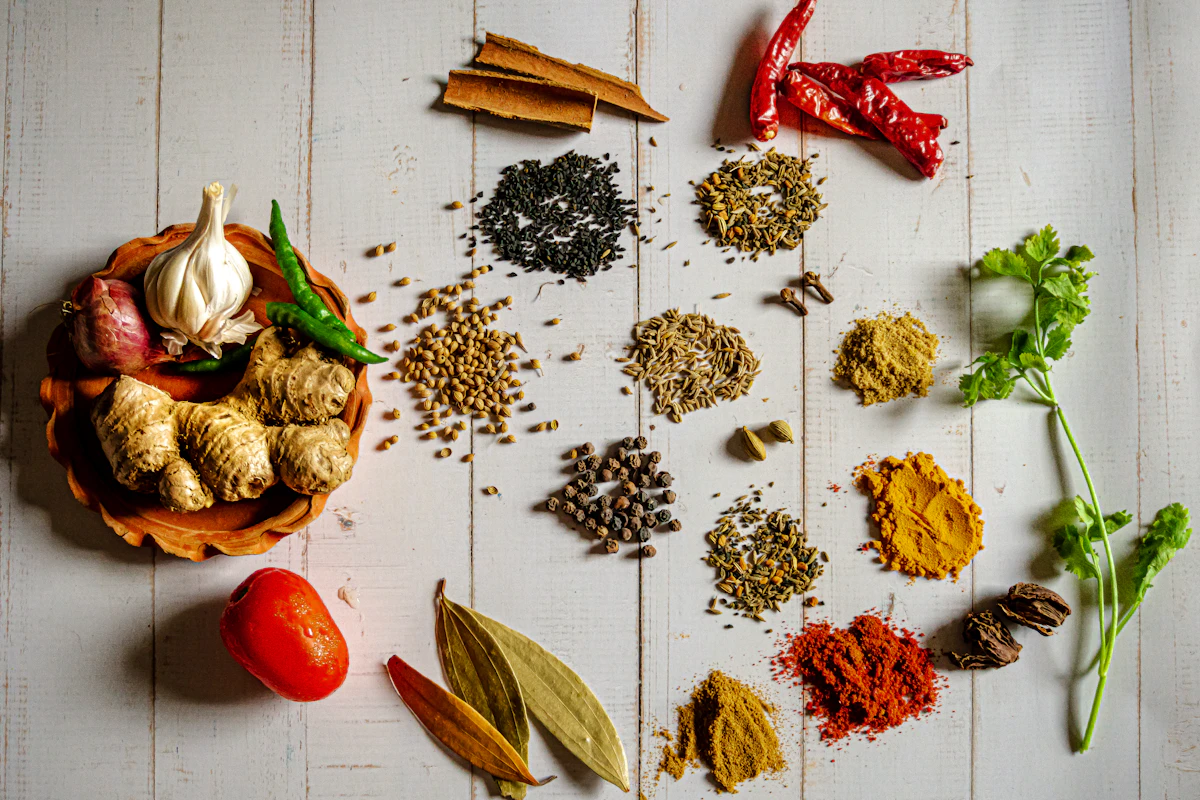
Fine chili powder: particle size decides both heat release and visual speckling.
4. Moisture, Ash and Micro Limits
Moisture above 12% risks caking and mold during ocean transit; total ash reflects cleanliness (soil and sand); micro limits (total plate count, yeast and mold, Salmonella) protect your HACCP plan. These are pass/fail values — they should be tested on every lot and written into the contract, not just the brochure.
| Parameter | Range | Typical |
|---|---|---|
| Heat (SHU) | 500 — 90,000 | 15,000 |
| ASTA Color | 40 — 180 | 120 |
| Mesh / Grind | 40 — 100 mesh | 40-60 mesh |
| Moisture | ≤ 12% | 9% |
| Total Ash | ≤ 8% | 6% |
| Total Plate Count | ≤ 100,000 cfu/g | compliant |
| Salmonella | negative | negative |
5. Supplier Checklist Before the First Order
- Request a COA from a recent shipment — not a brochure value.
- Ask how lot traceability works, from plantation code to container number.
- Confirm the lab: in-house is fine for routine checks, but ask which third party validates the method.
- Order a 200g sample and benchmark it against your current powder in a real production batch.
- Negotiate the spec into the contract: SHU tolerance, ASTA minimum, mesh range, moisture maximum.
- Start with one container and one spec — widen the range once consistency is proven.
Choosing chili powder is really choosing a data trail. A supplier who documents heat, color, grind and moisture lot by lot turns a commodity into an ingredient you can build a brand on. Request a quotation with your target spec →


